WRECK VALLEY · RELEASE 0.62.0
Find your rival.
Take the island road.
A persistent rival bearing, more forgiving country lanes, and a Jev driver who keeps fighting when a model response is unavailable.
Play the updated demo · Jev sessions & costs · Driving clip
Beyond 120 mRival hints survive car render culling
12 mFirm lane, plus soft shoulders
502 passedUnit and integration tests
A direction to chase
A red arrow at the map edge points toward distant opponents. The footer gives the nearest rival's distance and bearing relative to your car. It works with both map orientations and has a compact touch layout.
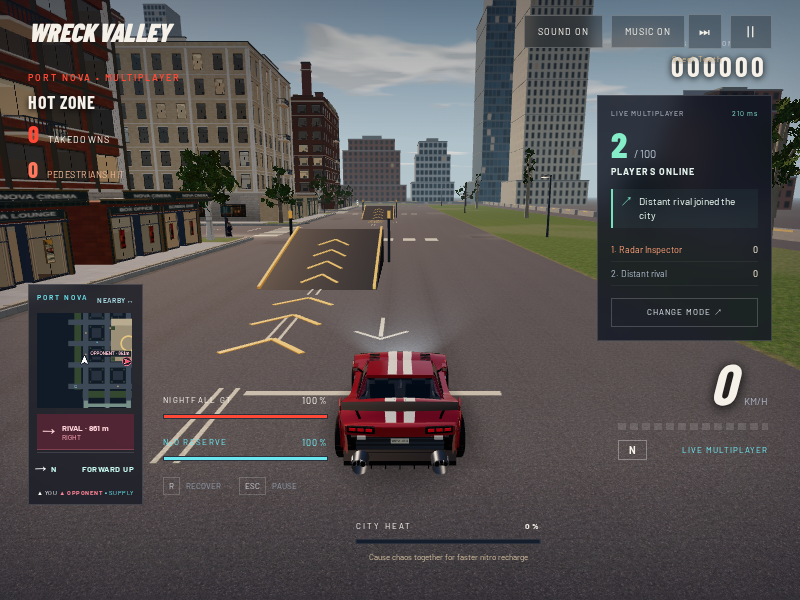 Actual production client and WebSocket in an isolated local test. The distant opponent remains outside the 3D actor stream, while the separate radar marker reaches the minimap.
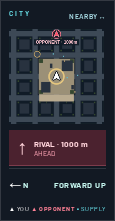 Radar-only rival at 1,000 m.
 Touch layout keeps the arrow and distance clear.
Only the nearest three active opponents receive distant markers. Traffic, wrecks and loading cars are excluded. The bearing is a direction hint: follow roads and the shallow crossing around obstacles.
Country lanes with dependable grip
The coastal and upper grove loops, their hill climbs and a new beach approach now have a firm gravel surface. Pale road colouring, soft edges and small roadside posts make the route easier to follow.
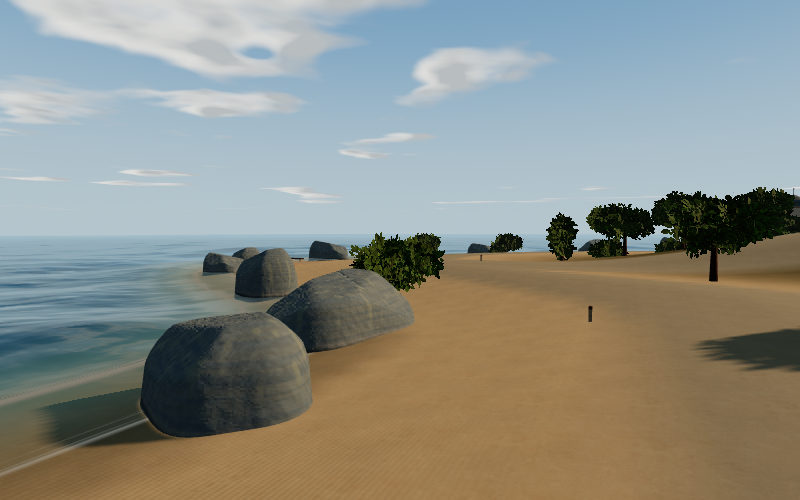 The country lane uses existing terrain geometry and material batches. The water and terrain heights remain unchanged.
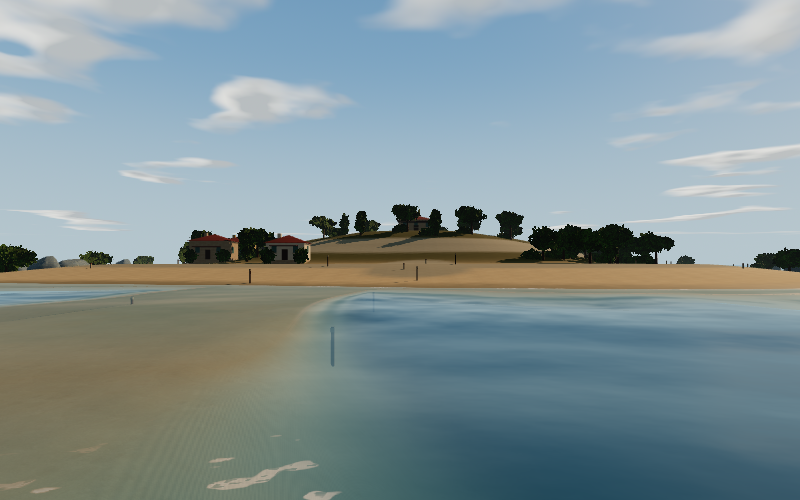 The firm beach approach joins the shallow crossing; submerged sections retain water resistance.
From the same initial forward speed and sideways momentum, the recovery test travels about 0.97 m sideways on gravel versus 1.84 m on dry sand. This measures a controlled slide recovery, not a lap-time claim. Loose beach sand and the submerged crossing retain their own handling.
Jev stays active
- Local fallback continues pursuing and uses safe nitro, drift and the existing learned combat approaches.
- Low health still triggers committed repair collection and escape behaviour.
- Long island road-to-road routes avoid shortcuts through the steep central grove; short combat approaches remain possible.
- The monitor still labels local control. Match and daily spending caps are unchanged.
The fallback physics test closes a 90 m chase to under 12 m, uses nitro and then prioritises repair at low health without changing its cost ledger. These are targeted behaviour checks; no new human win-rate result or new neural-policy deployment is claimed.
Across the shallows, around both loops, and back
Automated keyboard events through the production client and server. This is a montage of route milestones, not real-time footage. The test retains scenery collisions, protects the driver from damage and holds the six-minute round clock. Height range: -0.74 to 11.29 m. Route observations.
Verification and limits
- 502 unit and integration tests passed; lint and production build passed.
- Minimap pixel, orientation and mobile checks passed.
- Distant rival hint verified through the production WebSocket; removed rivals clear correctly.
- Keyboard beach approach and complete 246-waypoint island tour passed with scenery collisions enabled.
- Low, Balanced and High coastal rendering passed, including GPU/shared terrain agreement.
- Local fallback pursues, boosts, retains learned combat and prioritizes repair without spending.
- Gravel slide recovery and gradual dry-sand shoulders passed; full beach approach clears scenery.
- Asphalt vehicle measurements are identical; only their source checksum changed.
- Live release health, Jev response, controls, session history and unchanged spending limits passed; one verification request cost $0.000251748.
- Public report passed desktop/mobile checks and video playback; earlier reports remain available.
How this was testedAutomated physics, network, keyboard and browser tests, plus visual review of screenshots and the driving montage. Chromium uses SwiftShader; this is not a human playtest or a hardware FPS benchmark. An initial simultaneous software-rendered tour drove off the lane under concurrent software-rendering load. The final run uses a smaller viewport and synchronises GPU readback only for captured frames.
All generated reports, recordings and databases stay outside source control. The existing frozen self-play policy remains in use; the experimental neural PPO model remains offline.
Validation record · Production radar checks · Coastal renderer checks · Self-play report · Neural RL experiment